
B.Sc. (Hons.) Agriculture
B.Sc. (Hons.) Agriculture

About the Course
B.Sc. (Hons.) Agriculture is a four-year professional degree programme designed to develop skilled agricultural graduates equipped with scientific knowledge, practical exposure, and industry-relevant competencies. The course provides a strong foundation in modern agricultural practices, crop production, soil management, plant protection, agricultural biotechnology, horticulture, agribusiness, and sustainable farming systems.
The programme aims to produce confident and competent graduates capable of contributing to national food security, improving farmers’ livelihoods, embracing technological innovations, and promoting environmentally responsible agriculture. With a blend of theory, fieldwork, laboratory experience, and rural exposure, the course prepares students to become researchers, entrepreneurs, academicians, and agricultural officers serving the farming community and society.
About the Curriculum
The curriculum follows a multidisciplinary and experiential-learning model, integrating modern science with field-based training. Key components include:
Core Agricultural Sciences
- Agronomy
- Soil Science
- Horticulture
- Plant Breeding & Genetics
- Entomology
- Plant Pathology
- Agricultural Microbiology
- Crop Physiology
Allied & Applied Sciences
- Biochemistry
- Seed Science & Technology
- Agricultural Engineering Basics
- Food Science & Nutrition
- Forestry & Environmental Science
- Veterinary Science (Fundamentals)
Technology & Skill Development
- Biotechnology applications
- Computer applications in agriculture
- GIS & Remote sensing (if applicable)
- Climate-smart agriculture
- Organic and sustainable farming systems
04. Farm Training & Experiential Learning
- Hands-on crop production
- Soil and water management practices
- Pest and disease diagnostic training
- Seed production and processing
- Nursery management and horticultural practices
05. Rural Agricultural Work Experience (RAWE)
A unique component where students spend time in villages, interact with farmers, identify field-level problems, and provide practical solutions.
06. Student READY Programme
Strengthens practical exposure through:
- Internship
- Skill-oriented modules
- Experiential learning units
- Agribusiness training
This holistic curriculum ensures students graduate as industry-ready, field-ready, and research-ready professionals.
About the Department
The Department of Agriculture comprises multiple specialised divisions such as Agronomy, Soil Science, Entomology, Plant Breeding, Plant Pathology, Horticulture, Agricultural Extension, and more. Each division is led by highly qualified faculty with expertise in teaching, research, and field-level agricultural interventions.
The department is equipped with:
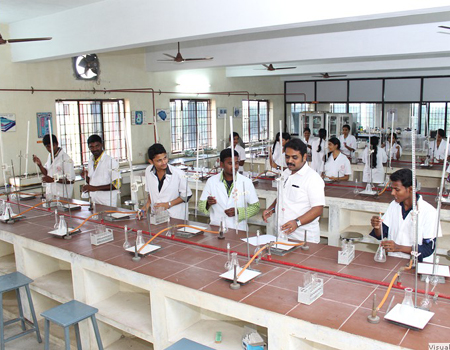
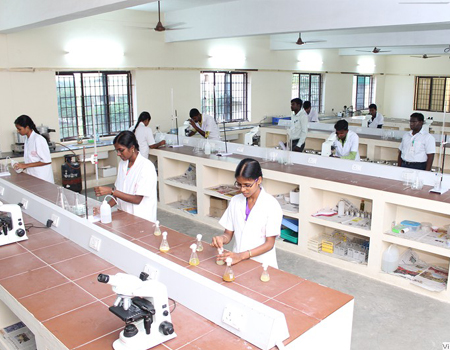
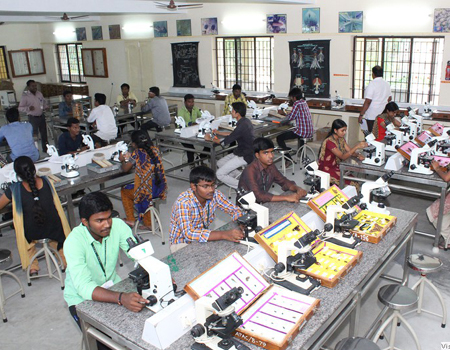
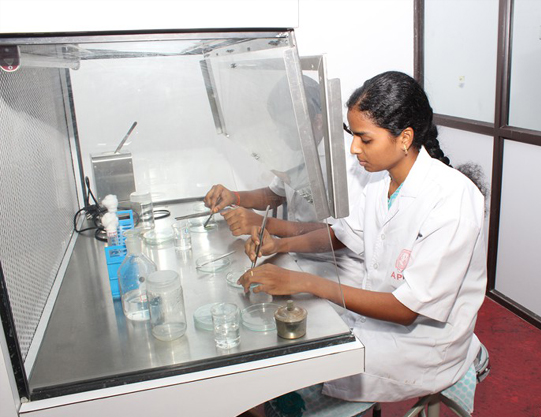
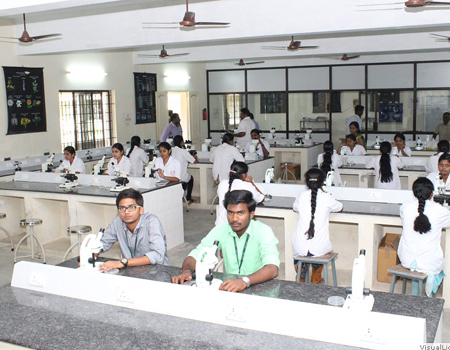
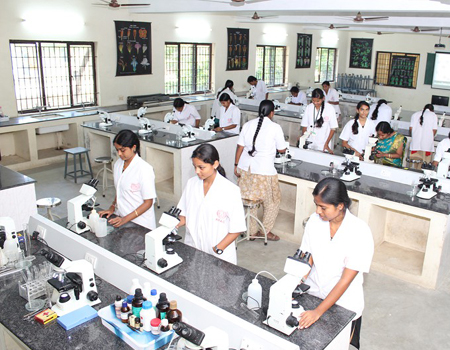
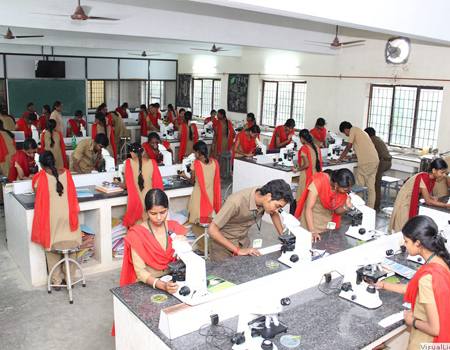
- Modern laboratories
- Demonstration farms
- Research plots
- Greenhouses and nurseries
- Seed testing and crop protection labs
Faculty members engage in ongoing research, farmer advisory programmes, and extension activities, ensuring students receive updated knowledge and real-world exposure. The department emphasises values, scientific thinking, discipline, and field-based problem solving.

Eligibility Criteria
Candidates seeking admission to B.Sc. (Hons.) Agriculture must satisfy the following:
- Completion of Higher Secondary (10+2) or equivalent from a recognized board.
- Mandatory subjects: Biology / Botany / Zoology, Chemistry, and Physics.
- Students from Agricultural Science / Vocational Agriculture streams are also eligible.
- Minimum percentage/aggregate as per admissions regulations (institution or university norms).
- Admissions are based on merit/ranking/selection guidelines prescribed by the affiliated university or regulatory authority.
Career Opportunities
A degree in Agriculture opens diverse, high-demand career paths in government, private, research, and entrepreneurial sectors. Graduates can pursue:
Government & Public Sector
- Agricultural Officer
- Horticulture Officer
- Block / Rural Development Officer
- Assistant Seed Officer
- Soil Conservation Officer
- Plant Protection Officer
- Government research institutions (ICAR, State Agri Departments)
Research & Academic Institutions
- Research Associate
- Junior Scientist
- Laboratory Specialist
- Teaching Assistant (with higher studies)
Private Sector
- Agri-input industries (seeds, fertilizers, pesticides)
- Food processing industries
- Agri-tech companies
- Irrigation and farm equipment companies
- Plantation and export companies
04. Banking & Finance
- Agricultural Field Officer (AFO) in nationalized banks
- NABARD and Cooperative Banks
- Crop insurance and agri-credit analyst roles
05. Entrepreneurship & Start-ups
- Organic farming ventures
- Agri consultancy services
- Nursery and landscaping units
- Seed production enterprises
- Precision farming & hydroponics
- Agri-based product manufacturing
06. Higher Education Opportunities
Graduates can pursue
- M.Sc. Agriculture (various specializations)
- MBA in Agribusiness
- Postgraduate Diploma in Agri-Tech, Agri-Data Science, etc.
- Competitive exams such as UPSC, State PSC, ICAR-JRF, ARS, and more.
Study, Spirituality & Service
The core guiding principles of the institution rest on a meaningful triad: